I haven't thought about Herzog in some time, but there has always been something about him that captivates me. His accent, his mannerisms, his thought process and what he says always seem to captivate me, especially the way he seems to pause long enough to contemplate anything before he says it. I think that is very telling about his character. He also has a seemingly honest way about him, that seems as though he is always speaking the absolute truth or something at the core of what he believes. But he also seems to give limited, or restrictively consistent responses. They seem almost scripted as if he has written a response once and will always stick to it. That leads me to believe that there is something more going on and I start to try to read between the lines. This makes me think that some of the questions he doesn't answer or the explanations he won't provide are more interesting than the ideas he does maintain. Recently, reading selections from Herzog on Herzog and watching the commentary version of his film, Stroszek, among other research, I have been reminded of this odd sense of the filmmaker.
My favorite and perhaps first encounter with Herzog as a figure in the filmmaking industry (I say in because of his appearance) was in the Incident at Loch Ness. I had heard of the man before then, but not really seen him or had any concept of who he is. The premise of this film is basically a mockumentary or spoof of a film crew attempting to make a documentary of Herzog while he makes a documentary about Loch Ness. This leads to tension between the differing goals of Herzog and Zak Penn. Perhaps even more interesting is the way in which Herzog delivers his stock answers and static explanations about the film. He basically says in interviews that this film, while fictional to some degree, still captures what his personality is like at work. So, basically it is him and it isn't him, which I find to be a pretty funny way of effectively circumventing the point of the questioning. True, this does in someways represent that unique sort of blend between factual documentary and scripted narrative of his own film style, but I can't help thinking he is really just poking fun at interviews and interviewers by not really giving them what they want. I think that his interview with Henry Rollins is slightly different, but that one is still humorous and both of them seem to take the interview process lightly. Maybe this isn't something real at all though, just German to English language barrier (then again maybe Herzog is just exploiting that expectation) and it just says something about me or how I would react if I were a famous filmmaker being interviewed.
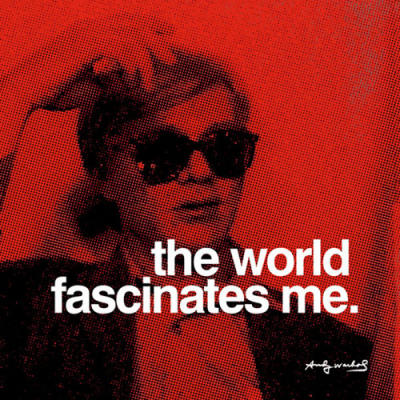
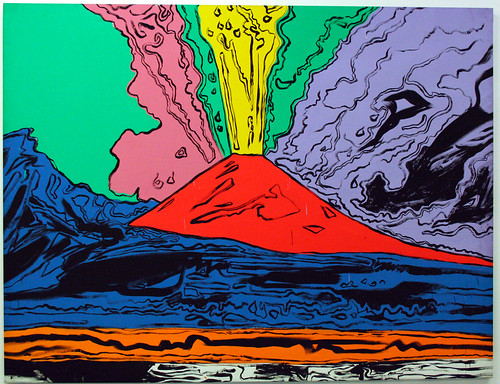
I think I relate most to the mention of obscure inspirations and artists that Herzog mentions in Herzog on Herzog. For example, after listing more well-known artists as influences he says, "there is is a painter who I feel even closer to, a virtual unknown called Hercules Segers." Then he goes on to explicate his affinity for this artist that the renowned Rembrandt recognized. However, he seems to be the only one who noticed this artist. In some sense this relates to Andy Warhol and his fascination with what he calls "leftovers." Perhaps it is that same quality that I relate to then. In my interest in independent artists I find that, like Herzog, there is plenty of beauty and undiscovered talent in a largely unknown artist or someone who may be really gifted, but just lacks the means to share there gifts and goes unnoticed. I derive a real pleasure from discovering these kinds of artists and I believe that is the origin of my interest in little known or independently released or DIY musicians. This relates to my own exploration of music and videos in my current project ideas since today there are so many internet sites that create means for little or unknown musicians to get recognized. I enjoy finding them through my job as a director at WLFM, the University radio station. It is that job that has made me more aware of a lot of these sites and new means for recognition of musicians. College radio in some ways is a great model for this because of its ability to give heavy rotation to artists that are overlooked by mainstream artists.
On a side note I don't know what to make about the whole idea of Herzog's exploitation of Bruno S. It seems unlikely that he was exploiting Bruno from the beginning since he wrote a whole screenplay out of guilt to include Bruno in a main role. And it is tough to dismiss that "the Bruno" is very clever indeed. Perhaps it was he who exploited Herzog? Who is exploiting whom? I would suggest that Stroszek represents a symbiotic relationship. Bruno may have learned from being exploited and abused all his life even if he allowed Herzog to also exploit him in some ways.I think I relate most to the mention of obscure inspirations and artists that Herzog mentions in Herzog on Herzog. For example, after listing more well-known artists as influences he says, "there is is a painter who I feel even closer to, a virtual unknown called Hercules Segers." Then he goes on to explicate his affinity for this artist that the renowned Rembrandt recognized. However, he seems to be the only one who noticed this artist. In some sense this relates to Andy Warhol and his fascination with what he calls "leftovers." Perhaps it is that same quality that I relate to then. In my interest in independent artists I find that, like Herzog, there is plenty of beauty and undiscovered talent in a largely unknown artist or someone who may be really gifted, but just lacks the means to share there gifts and goes unnoticed. I derive a real pleasure from discovering these kinds of artists and I believe that is the origin of my interest in little known or independently released or DIY musicians. This relates to my own exploration of music and videos in my current project ideas since today there are so many internet sites that create means for little or unknown musicians to get recognized. I enjoy finding them through my job as a director at WLFM, the University radio station. It is that job that has made me more aware of a lot of these sites and new means for recognition of musicians. College radio in some ways is a great model for this because of its ability to give heavy rotation to artists that are overlooked by mainstream artists.